

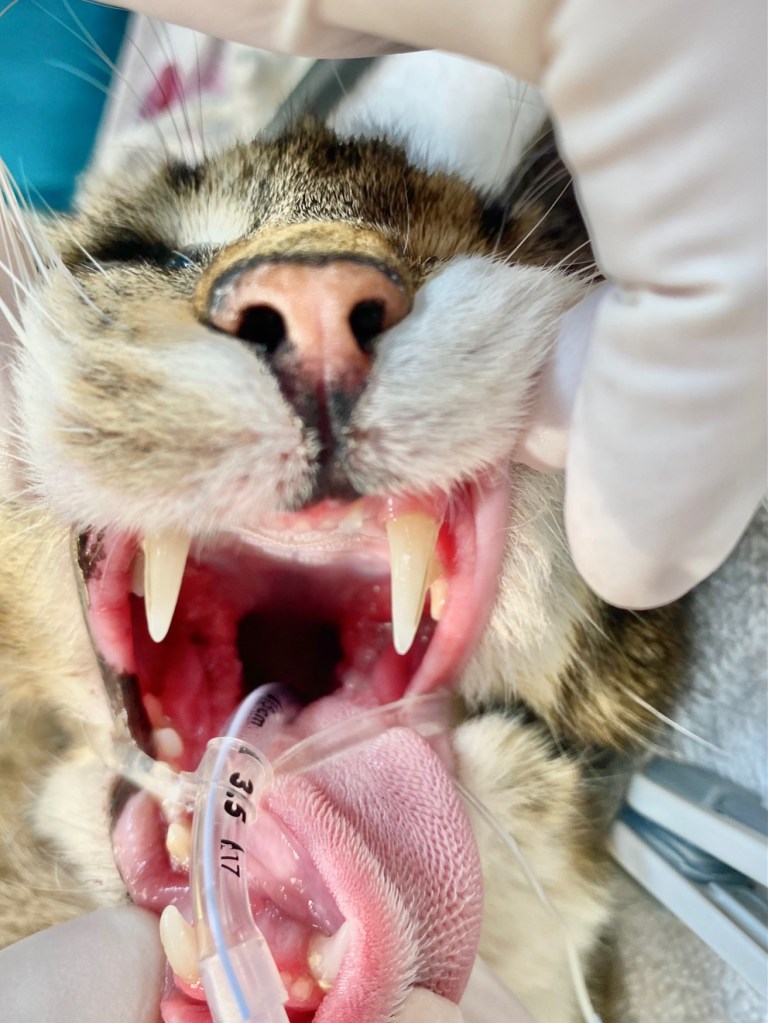
This 10 year old DSH cat was referred to me for severe gingivostomatitis. Blood work showed it was FIV/FeLV negative with normal CBC and Biochemistry results. Biopsy result was inflammation only. He had been treated by the referring vet with depomedrol injections with oral temgesic for 5 months. Initially he had responded well to treatment, but after the last injection the response was not as good. He was not grooming, was excessively drooling and eating very little. When under the first anesthetic full mouth x-rays were performed and all premolars and molars extracted. He was started on gabapentin.
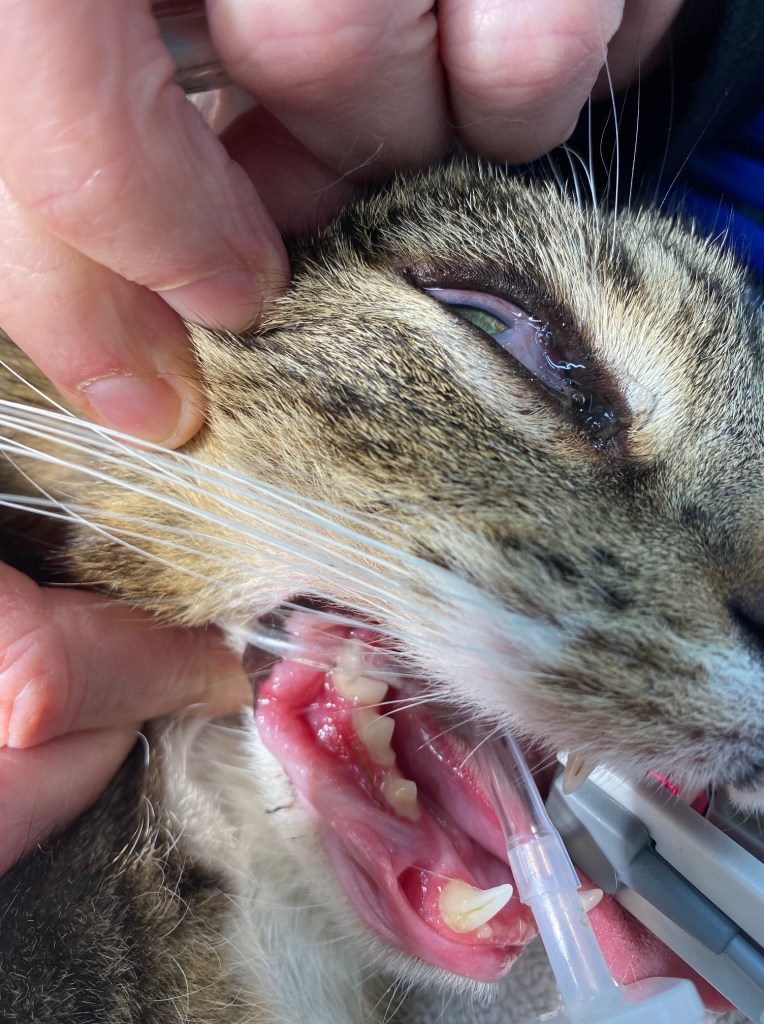
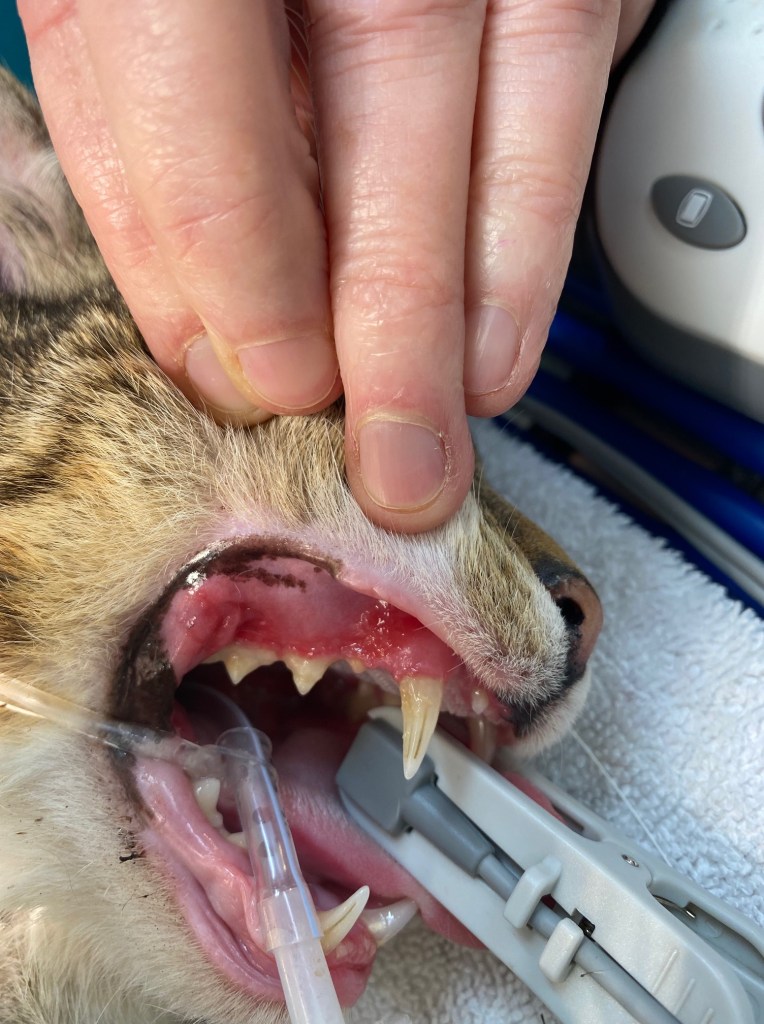
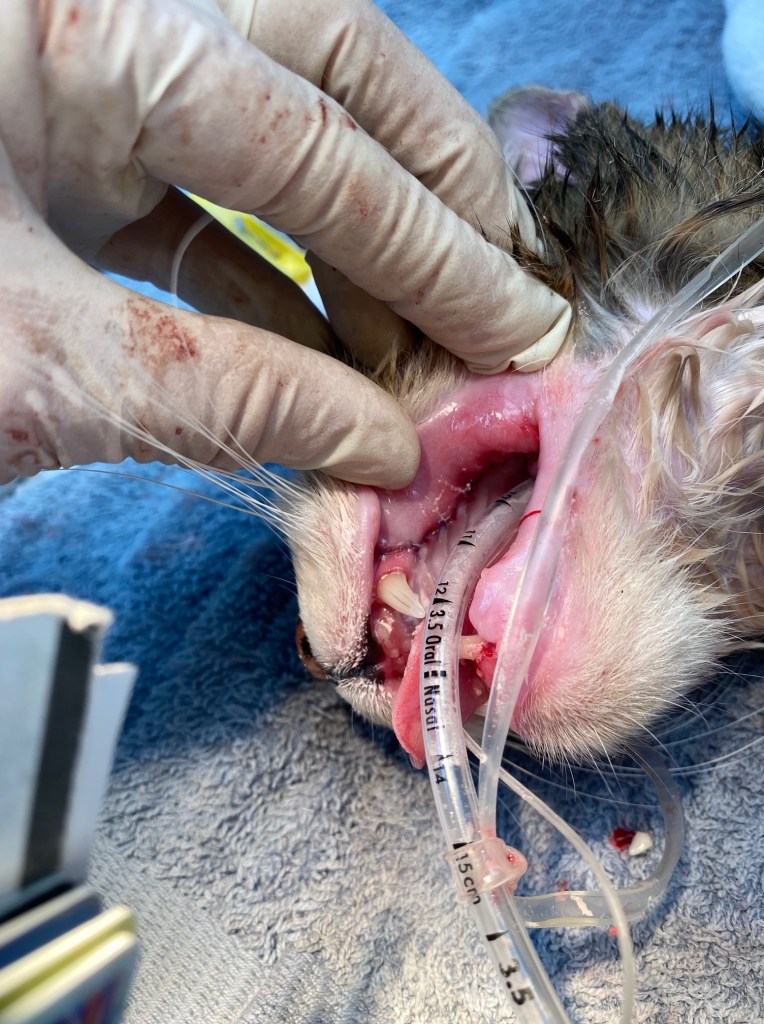
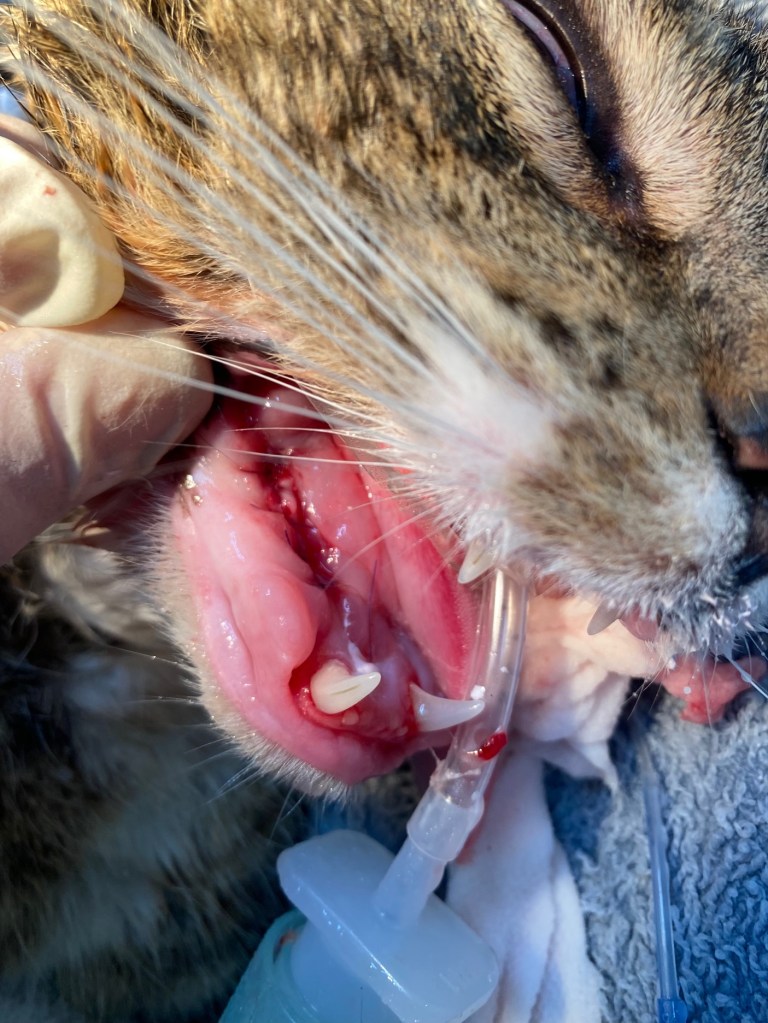
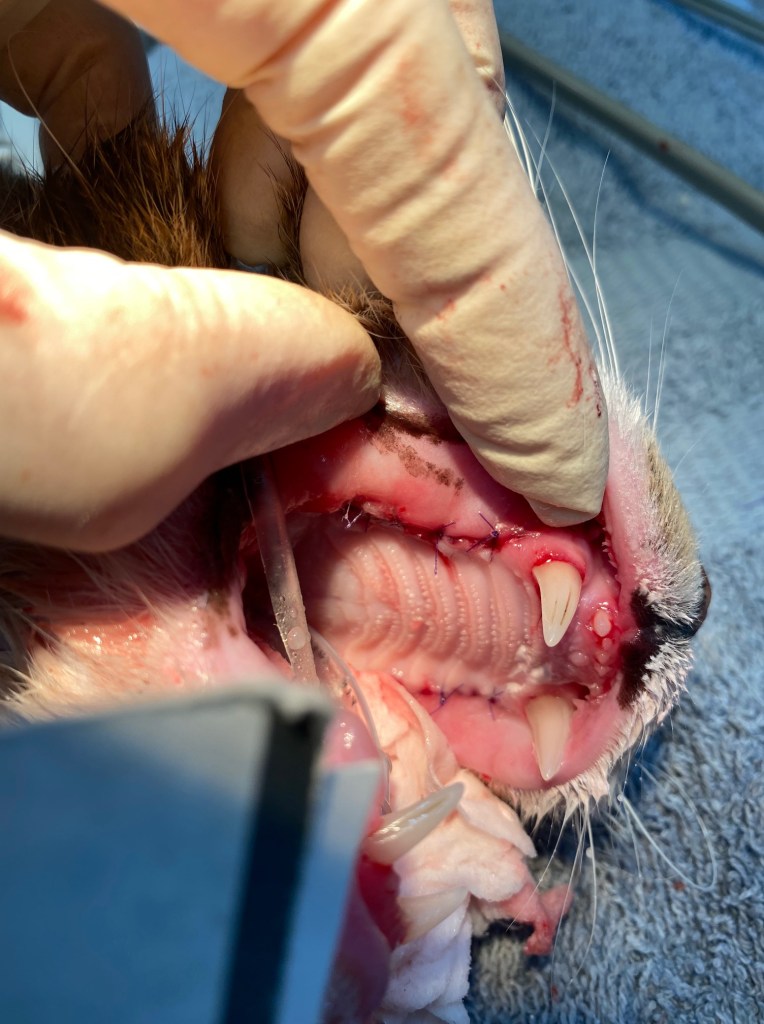
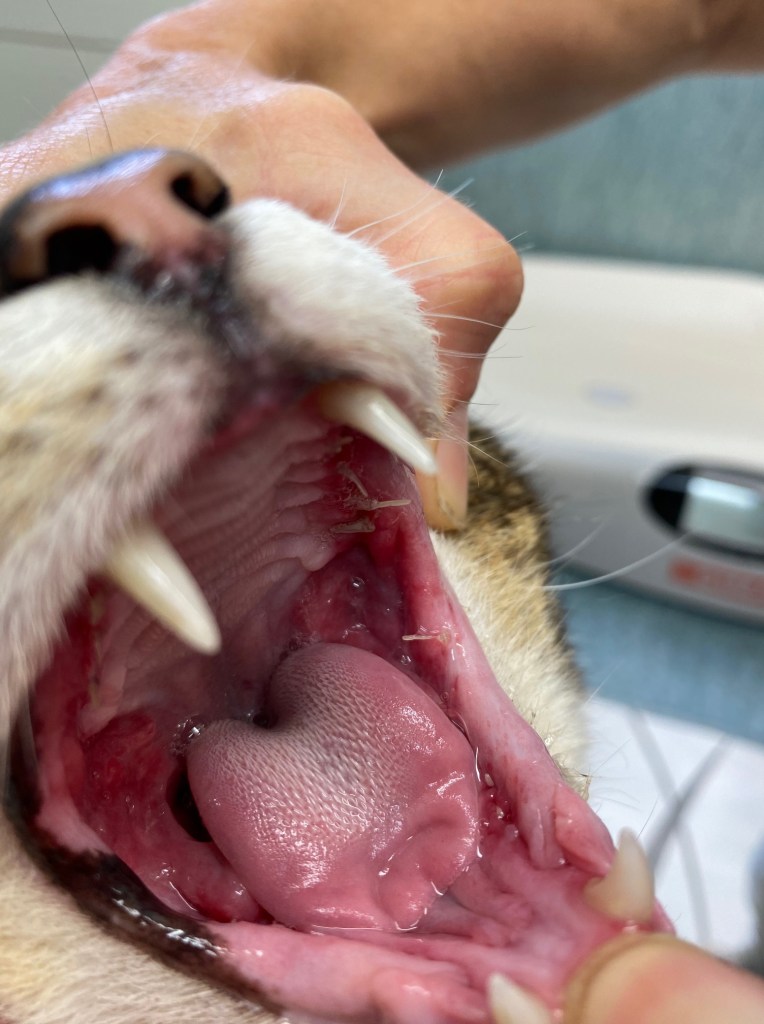
There was still some inflammation in his mouth after the first surgery. A toxoplasmosis titre was done and he was started on cyclosporine. An immediate response was seen and he was much happier at the follow up appointment and had started to eat, groom and gain weight.
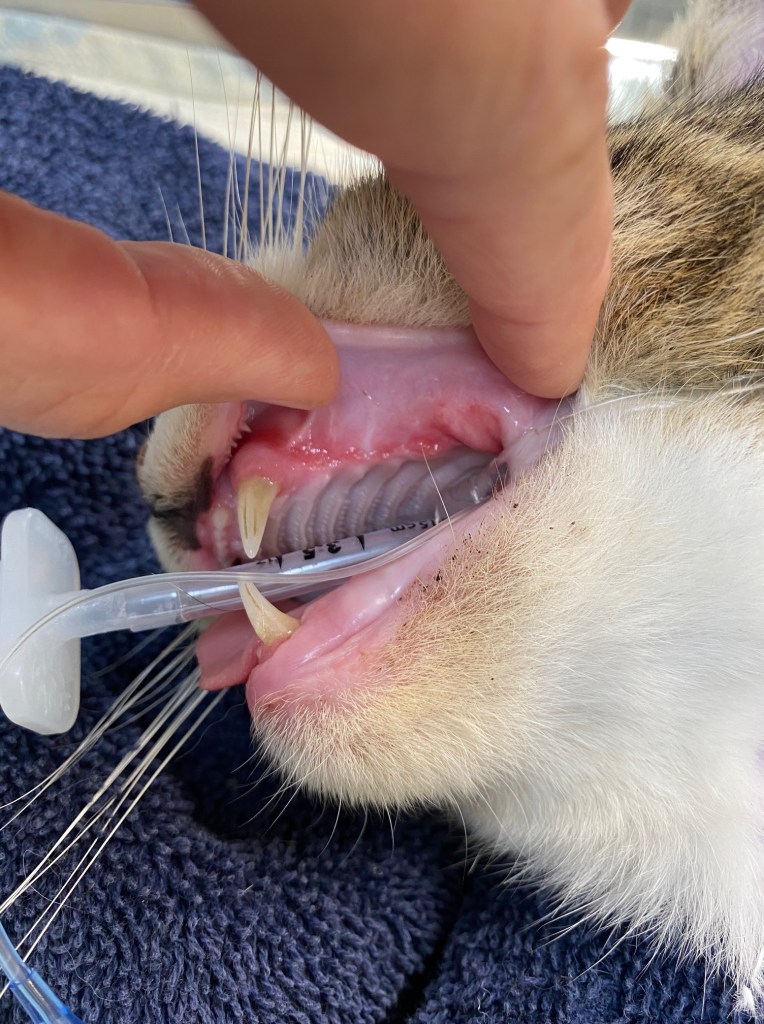
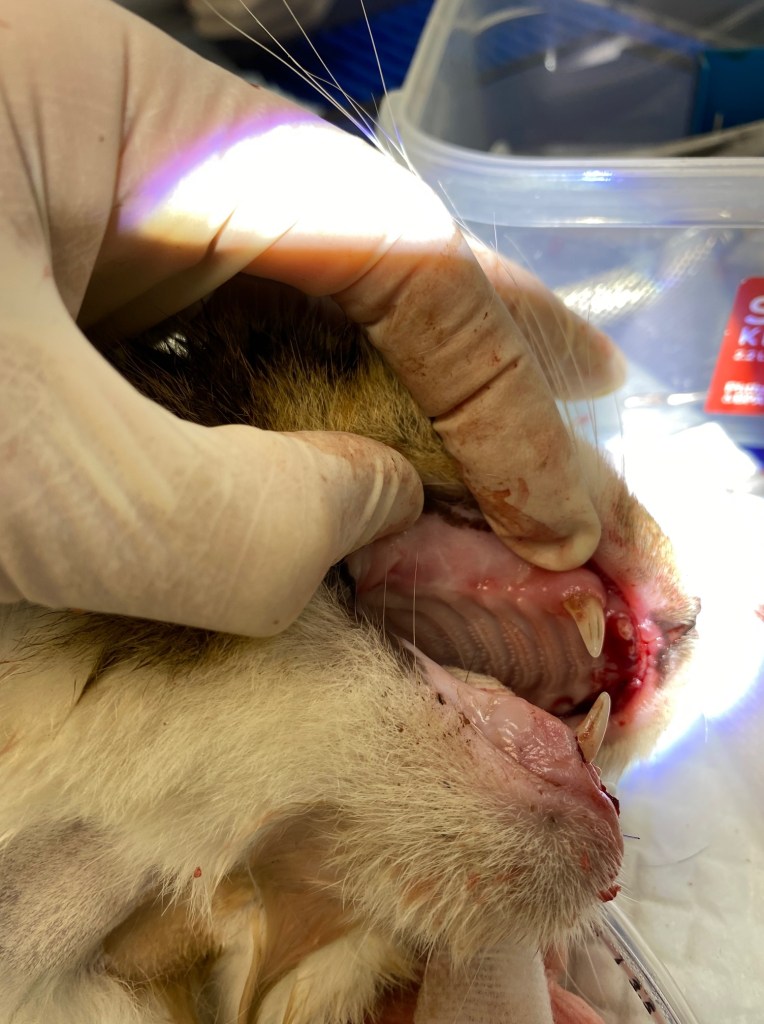
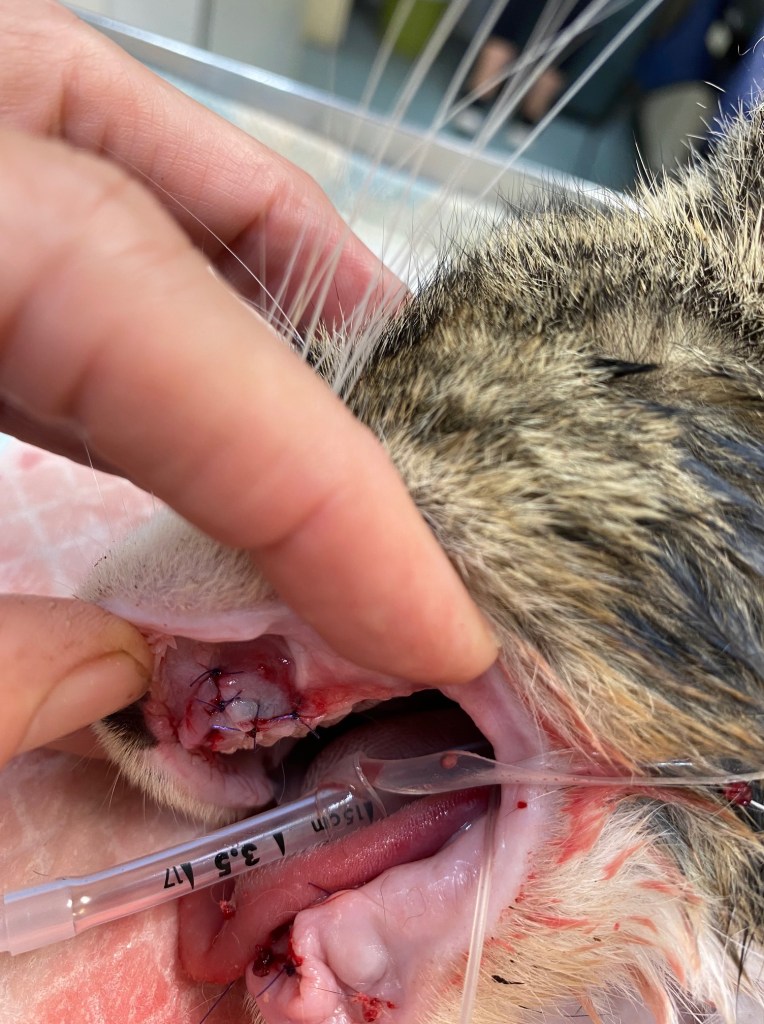
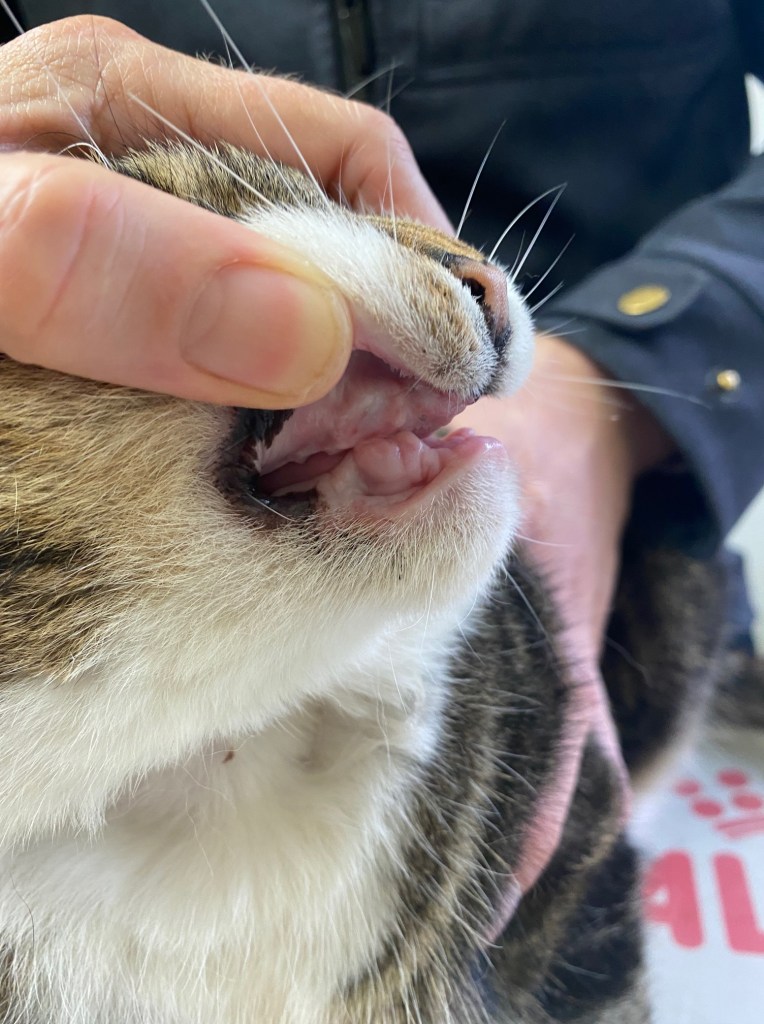
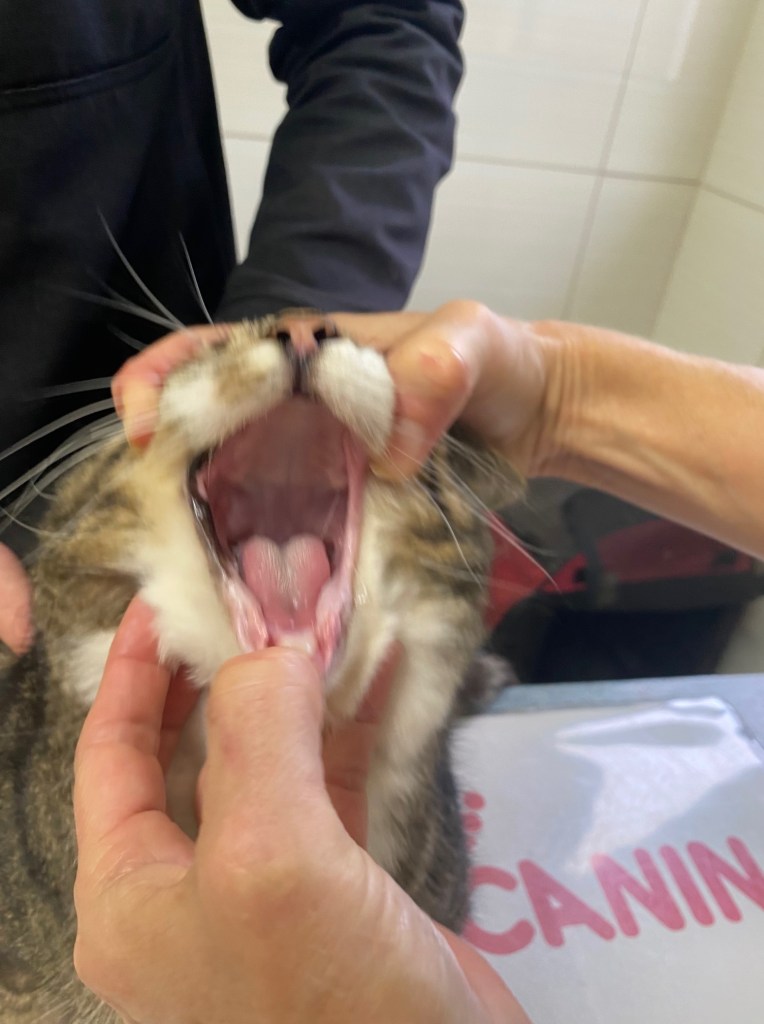
Cyclosporine is relatively expensive so after 3 months he had a second operation to remove all the remaining teeth in the mouth (canines and incisors). He was started on the antibiotic clavulox and NSAID metacam and weaned off cyclosporine after this operation. Over the next few weeks gained 600 grams. Now there is no inflammation in his mouth and he is eating well, grooming, no longer dribbling and a much happier cat!
A biopsy should always be recommended to ensure there is no sign of neoplasia. The operations are long and it is very important the cat is kept warm and the temperature monitored during surgery. Sometimes only extraction of premolars and molars will be needed and sometimes even after total extractions the animal may still need an anti-inflammatory drug. Each case is different.
 Pet DENTISTRY