
This 12 year old West Highland White Terrier was referred because it had severe gingivitis and gingival hyperplasia. The referring vet had performed biopsies which the lab had reported as
“marked chronic gingivitis; neutorphilis, histiocytic, plasmacytic and lymphocytic. This is one of the most marked cases of gingivitis I have ever seen”.
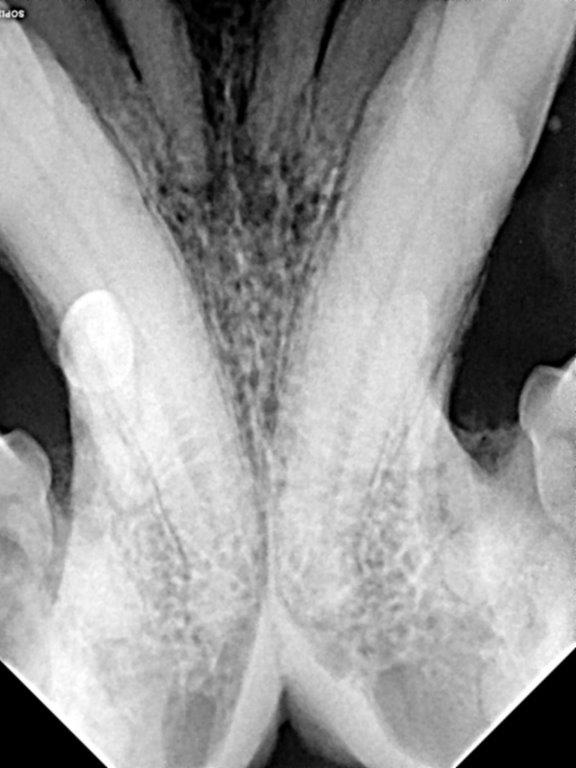
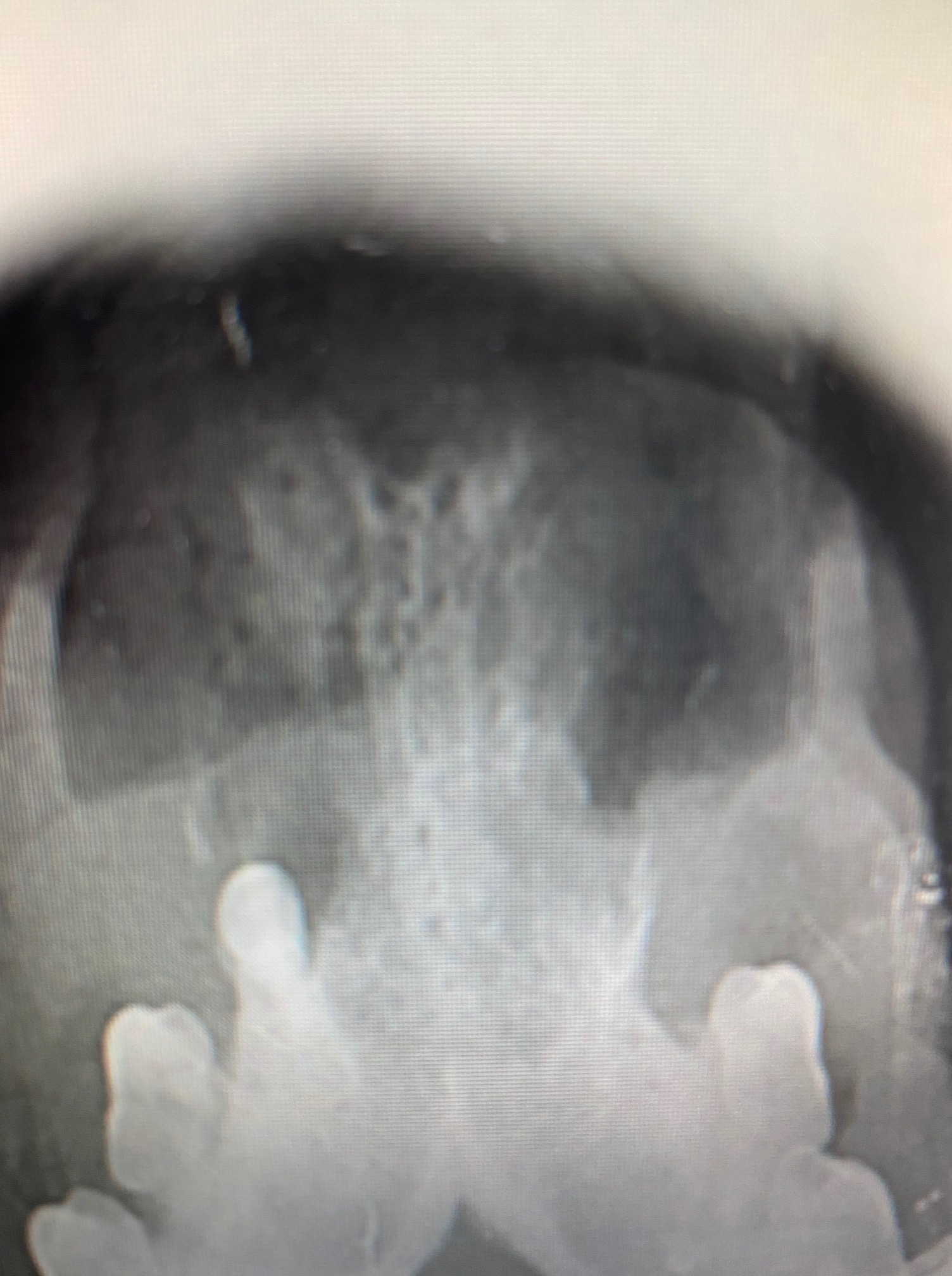
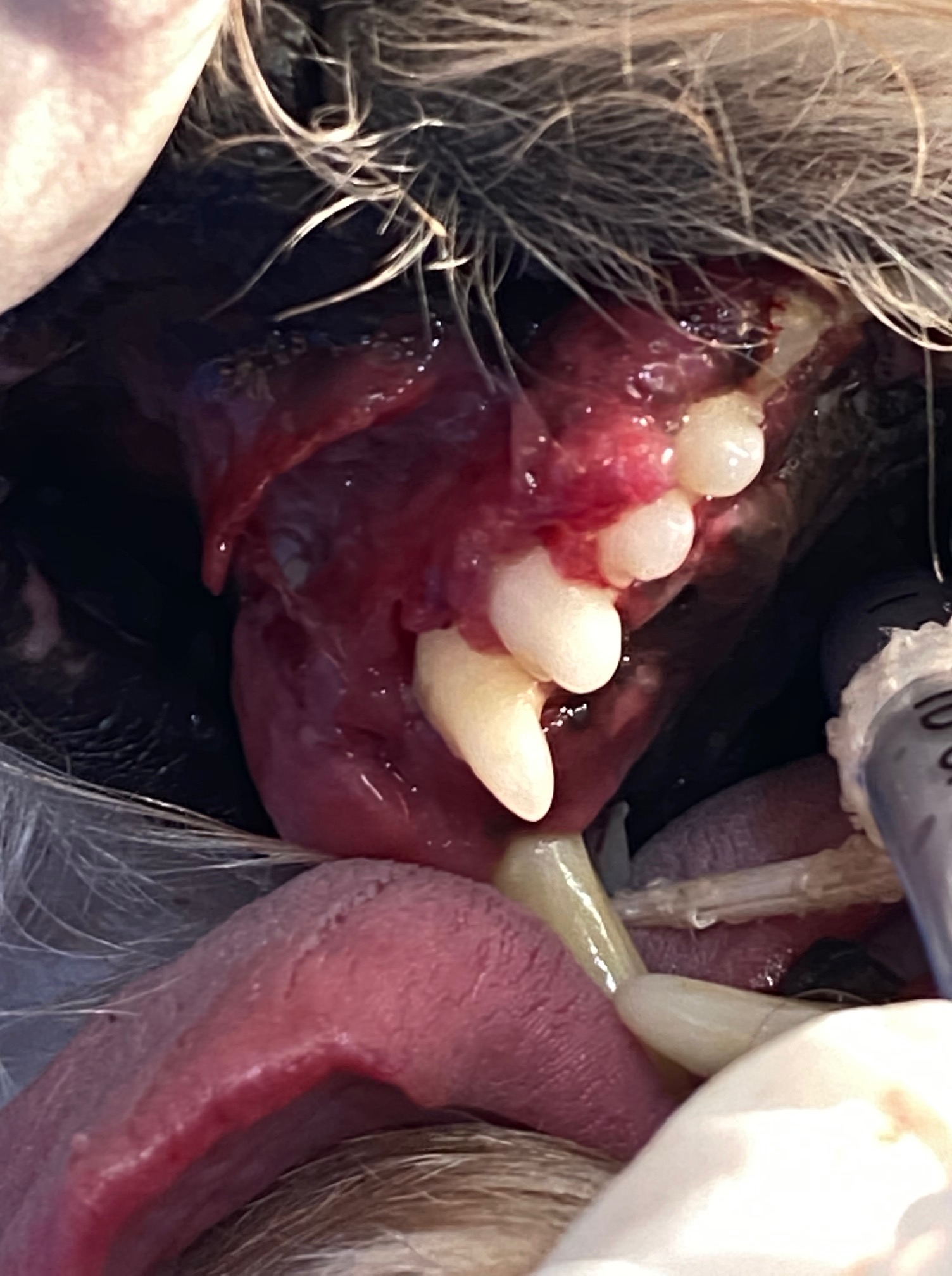
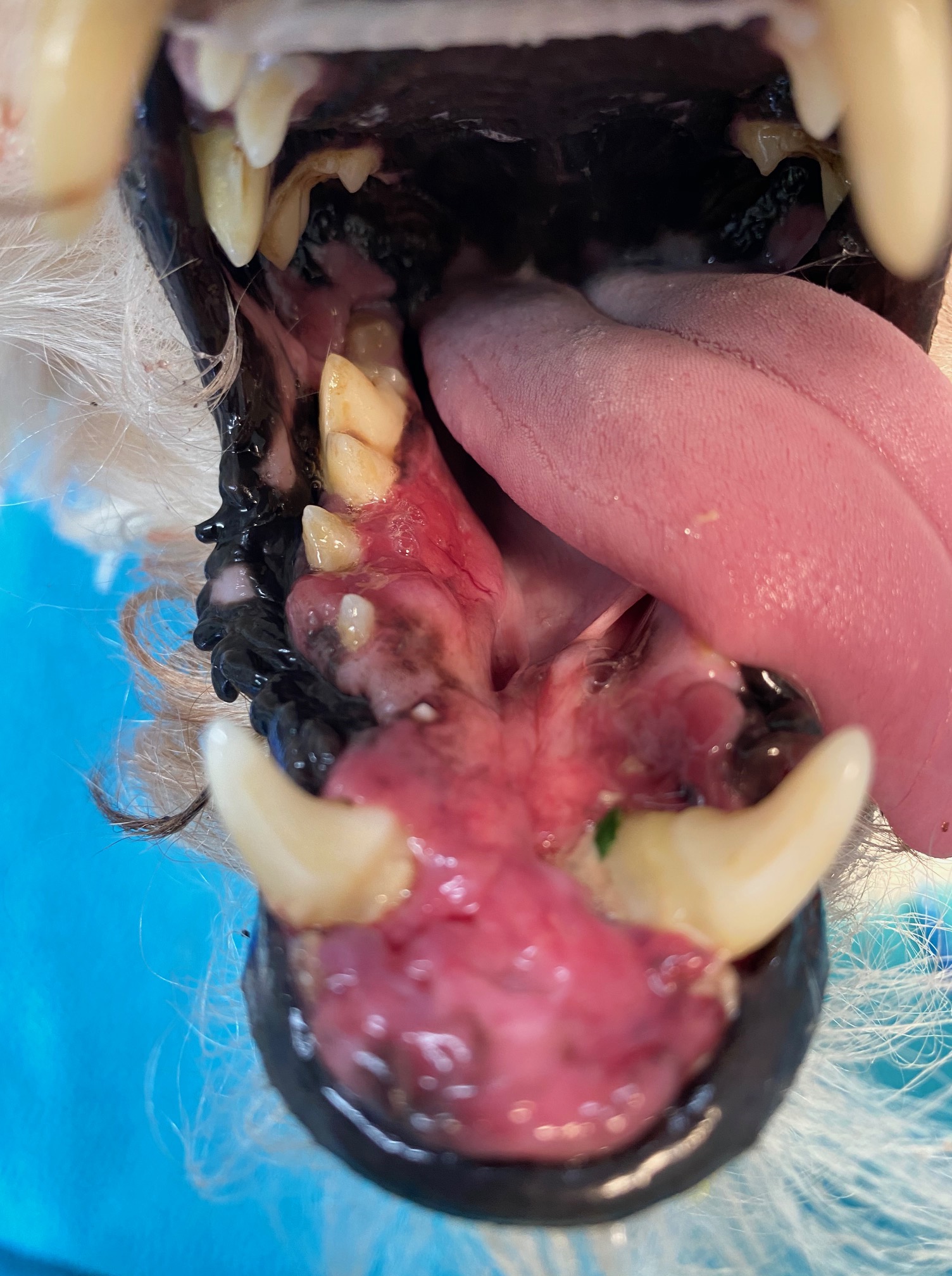
When under GA and the teeth were probed there were 10mm probing depths lingually on both lower canine teeth with severe inflammation of the gingiva bucally and extending below the tongue (see photo). The gingiva around 104 was hyperplastic and inflamed and so friable it just disintegrated when I swabbed it. The other teeth also had increased probing depths. On the xray resorption and ankylosis of many of the teeth can be seen. There was a large lesion in the buccal mucosa possibly where 404 contacted the lip.
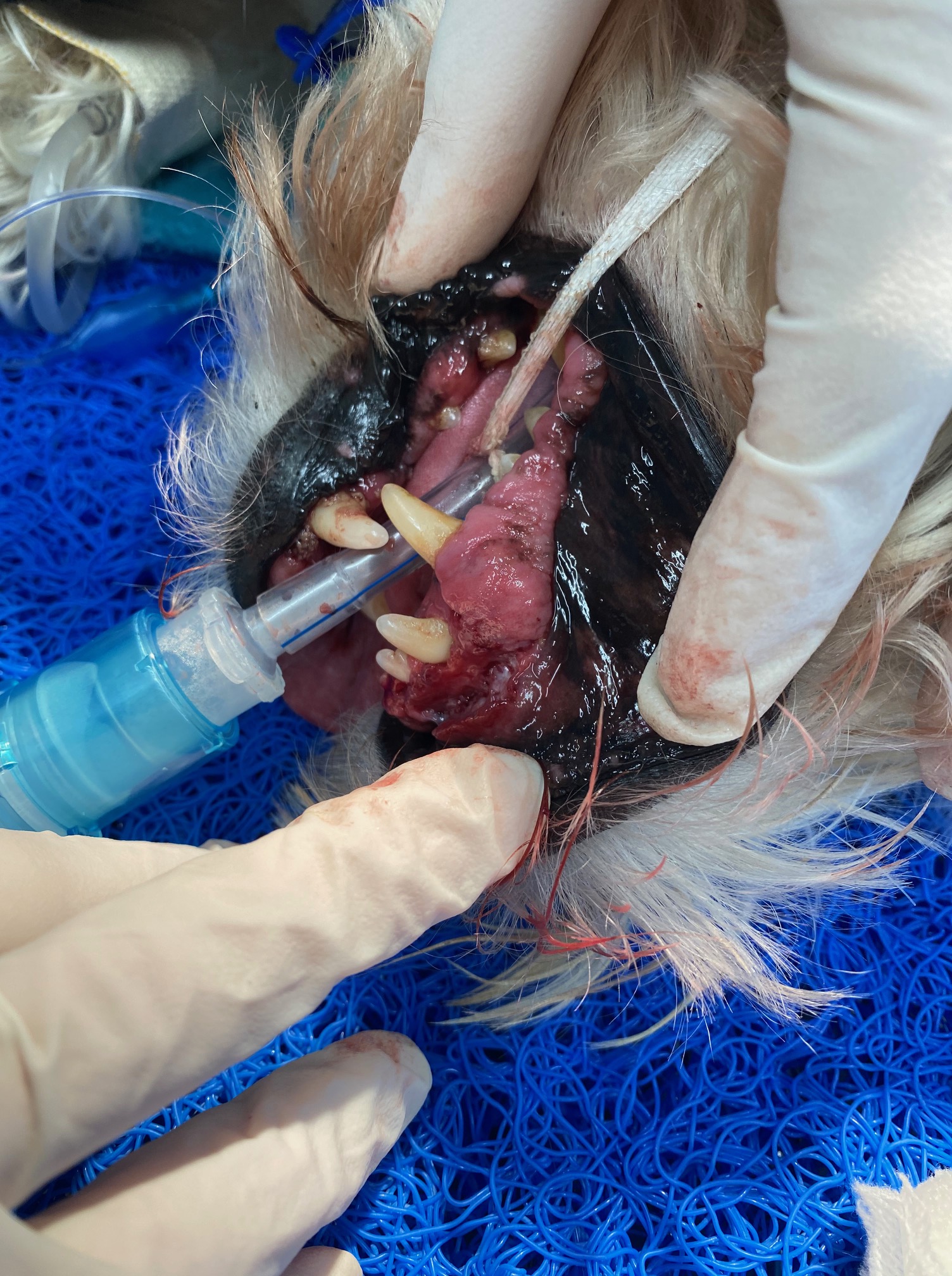
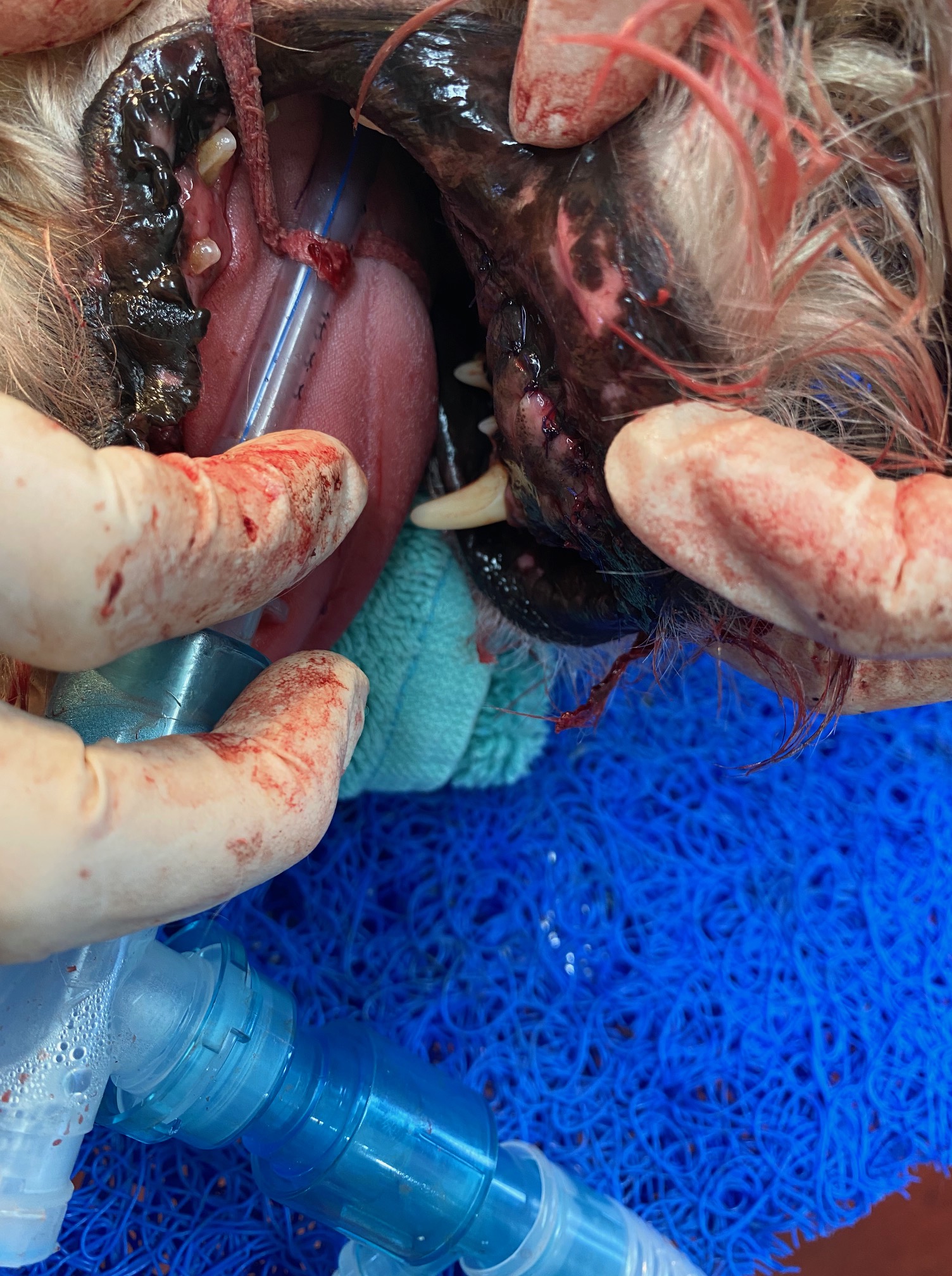
A large gingival flap was made and 203, 202, 201, 101, 102, 103, 104, 105 and 106 were extracted using a vet tome, elevators and luxators. The friable gingiva was resected just above the mucogingival margin. The buccal mucosa was bluntly dissected the sutured to the palatal mucosa. 304, 404 and 405 were extracted using the vet tome. The owner was warned pre-operation of the complication of jaw fractured. This did not occur as I used the vet tome, burred away some alveolar bone, used gentle elevation and was patient!. The gingiva between the canines, where the lower incisors had been previously extracted, was also friable. I placed cruciate sutures over the canine sockets to hold the blood clot in place but could not suture the gingiva closed as the tissue was too friable and inflamed. The area between the lower canines was left to heal by secondary intention.
Although the dog was taking the antibiotic Doxine, due to the severity of the inflammation I also started iv Cefazolin. Clavulox tablets were continued post op for 6 days. NSAIDS were prescribed for pain relief. iv fluids, dental nerve blocks and pre op bloods were also performed. The temperature was monitored throughout the operation (which took 3 hours to complete) as in long operations on small dogs hyporthermia can develop if this is not checked. A diet of soft chunky food for 7-10 days was recommended.
The owners contacted me 3 days later to say the dog was eating well and “back to its old self”.
The photos at the bottom of this blog show the same view before and after surgery.
 Pet DENTISTRY